If you've ever stepped into Downward Facing Dog and immediately thought, "There's no way this can be a resting pose," you're not alone.
Despite being one of the most recognizable yoga poses, Downward Facing Dog can feel surprisingly challenging—especially when you're new to yoga. Tight hamstrings, stiff shoulders, limited mobility, or simply learning how to coordinate the movement can make the pose feel anything but relaxing.
The good news? It doesn't have to look perfect to be beneficial.
Why Does Downward Dog Feel So Hard?
Downward Facing Dog asks several parts of your body to work together at the same time. As you press your hands into the mat and lift your hips, your shoulders stabilize, your core supports your spine, and your legs begin to lengthen.
For many beginners, this combination is unfamiliar.
Some of the most common reasons the pose feels difficult include:
Tight hamstrings
Limited shoulder mobility
Weak upper body or core strength
Trying to force the heels to the floor
Holding unnecessary tension in the neck or jaw
Remember, yoga is a practice—not a performance. Your body will become stronger and more comfortable with consistency.
Common Mistake #1: Trying to Straighten Your Legs
Many people believe their legs should be completely straight.
In reality, bending your knees is often one of the best ways to improve the pose.
A gentle bend allows you to lengthen your spine instead of rounding your back. Over time, as your hamstrings become more flexible, your legs may naturally begin to straighten.
Common Mistake #2: Focusing on Your Heels
One of the biggest misconceptions is that your heels must touch the floor.
For many people, they never will—and that's perfectly okay.
Instead of thinking about lowering your heels, focus on lifting your hips up and back while creating length through your spine.
The quality of the stretch matters much more than where your heels end up.
Common Mistake #3: Carrying Too Much Weight in Your Hands
If your wrists feel sore, you may be placing too much of your body weight into your hands.
Try pressing firmly through your palms while gently sending your hips farther back. This helps distribute your weight more evenly between your hands and feet.
Imagine your arms and spine creating one long line.
Common Mistake #4: Shrugging Your Shoulders
It's common to let the shoulders creep toward the ears.
Instead, gently draw your shoulder blades down your back while keeping your neck long and relaxed.
Your shoulders should feel active—not tense.
A Beginner-Friendly Modification
If Downward Dog feels overwhelming, don't hesitate to modify.
Try:
Bending both knees generously.
Widening your stance slightly.
Placing your hands on yoga blocks if needed.
Practicing Puppy Pose to build shoulder mobility.
Modifications aren't shortcuts—they're tools that help you practice safely and confidently.
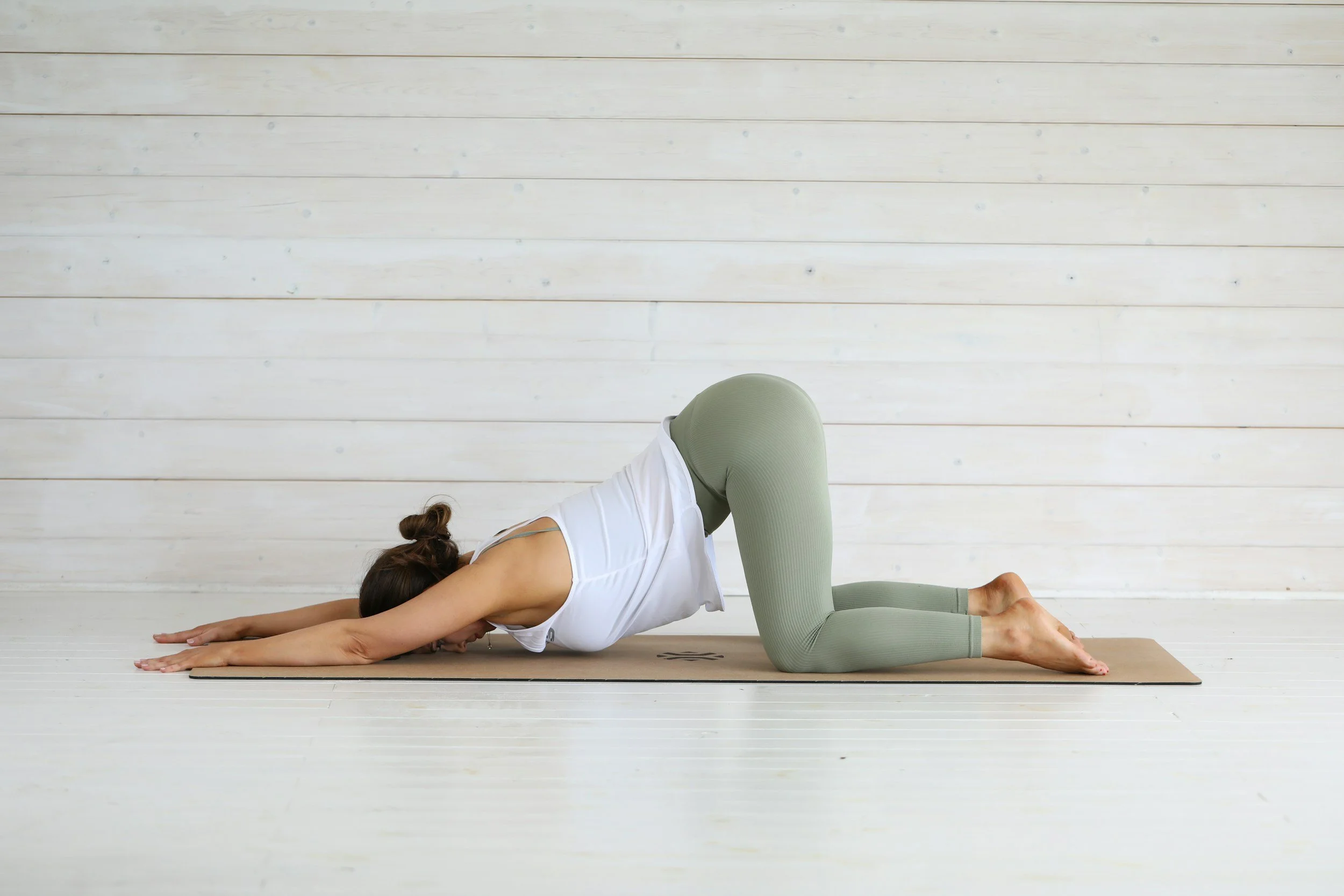
Puppy Pose
Progress Takes Time
Downward Facing Dog is a pose that evolves with practice.
Some days it may feel spacious and energizing. Other days it may feel tight or challenging. Both experiences are completely normal.
Rather than aiming for a picture-perfect pose, focus on creating steady breath, finding length through your spine, and moving with awareness.
Every time you step onto your mat, you're building strength, mobility, and confidence.
Final Thoughts
If Downward Facing Dog feels difficult, you're in good company. Many beginners experience the same challenges, and with patience and consistent practice, the pose often becomes more comfortable over time.
Give yourself permission to bend your knees, move at your own pace, and let your practice grow with you. Yoga isn't about perfection—it's about meeting yourself where you are today.
Looking for more guidance?
If you'd like detailed step-by-step instructions, alignment cues, beginner-friendly modifications, common mistakes, and teaching tips for Downward Facing Dog and other essential poses, check out my Foundational Pose Handbook. It's designed to help beginners build confidence and support newer yoga teachers as they develop their practice and teaching skills.